Best Compensation Cycle Software (2026)

Last updated: October 2026.
Compensation cycle software runs your merit, bonus, and promotion cycles from setup to final approval: eligibility rules, budgets, manager recommendations, calibration, approvals, and the letters that go to employees. The best platform is the one that handles your actual cycle, including the mid-cycle changes every cycle needs, without sending you back to spreadsheets. This guide compares 6 platforms on what matters during a live cycle. For the broader category, see our best compensation planning software platforms compared.
What compensation cycle software does
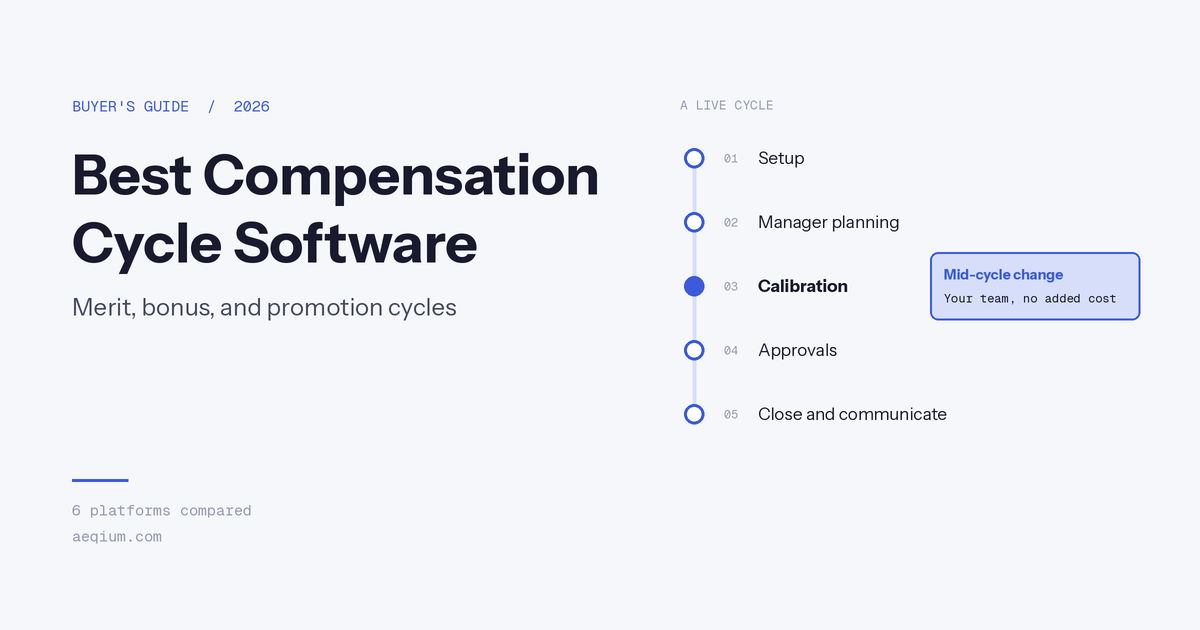
- Setup: Define eligibility, proration, guidelines, budgets, and approval chains for each program.
- Manager planning: Managers make recommendations within budget, with guidelines and context for each employee.
- Calibration: Review recommendations across teams to keep decisions fair and consistent.
- Approvals: Route recommendations through approval chains by business unit, region, or level.
- Close and communicate: Export payroll-ready results and generate compensation letters and statements.
How to evaluate compensation cycle software
- Configuration: Can your comp team set up and change eligibility rules, formulas, and guidelines itself?
- Approval chains: Can approvals follow your actual org structure, with different chains by business unit or region?
- Budget distribution: Does it support the budget model you use: top-down, bottom-up, centralized, or distributed?
- Calibration: Can leaders compare recommendations across teams before approval?
- Mid-cycle changes: When something changes during a live cycle, who makes the change, how long does it take, and is it billed?
- Total cost: What do implementation, support, and changes after go-live cost on top of the subscription?
Quick answer
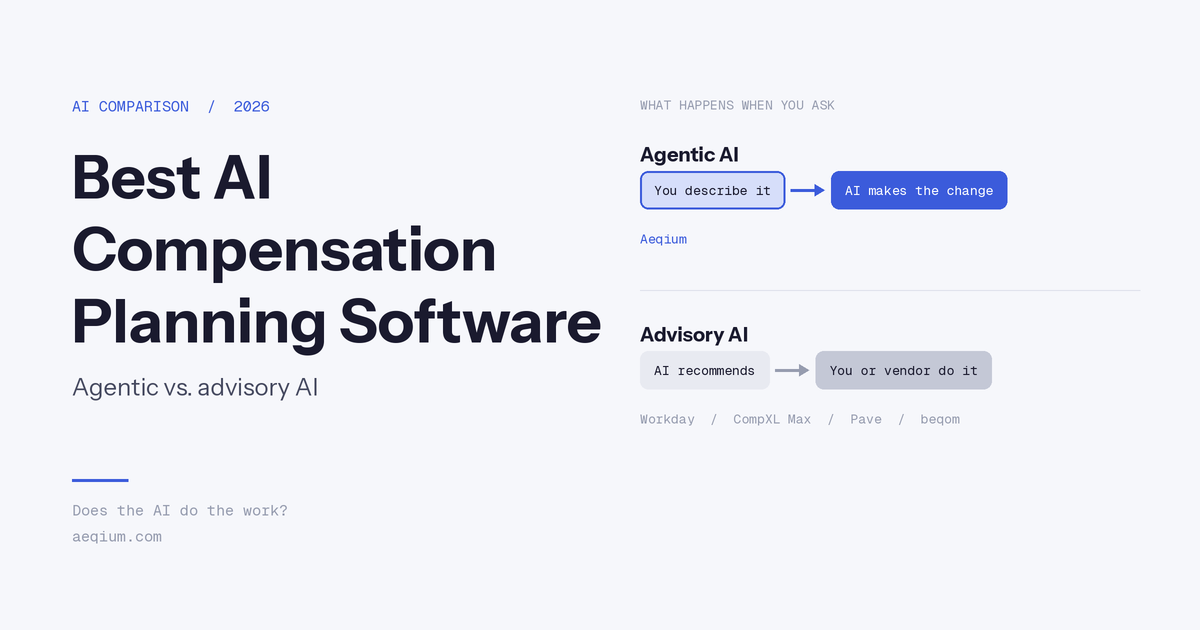
- Best for complex, global cycles your team configures and changes itself: Aeqium
- Best for enterprises fully standardized on Workday: Workday Compensation
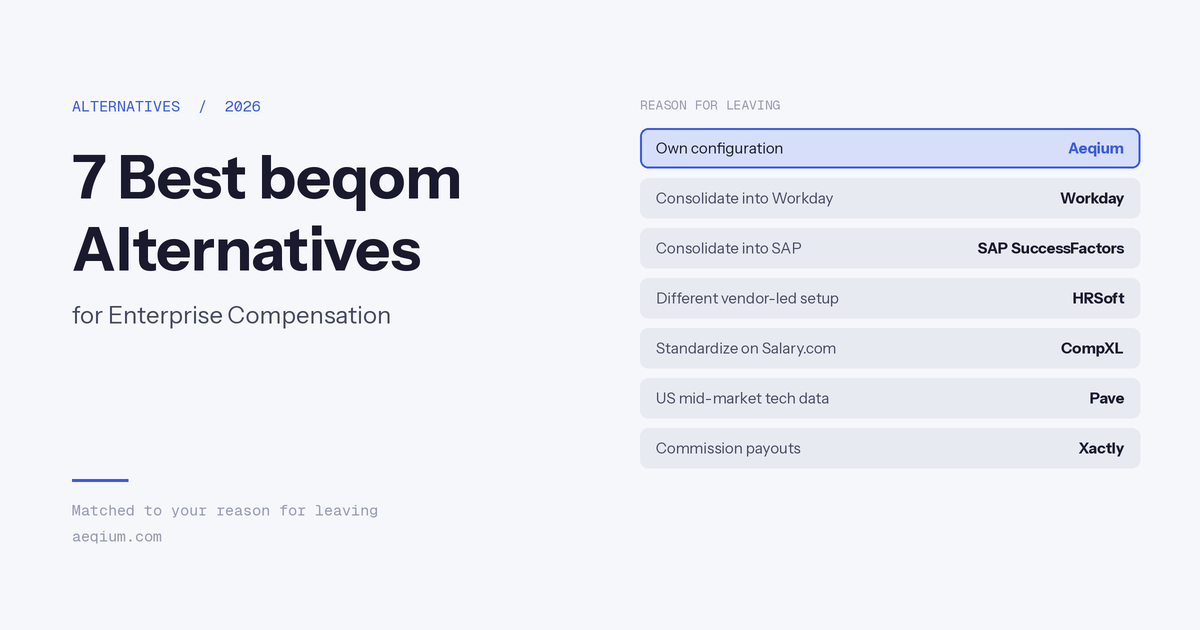
- Best for cycles that include commission payouts in one system of record: beqom
- Best for vendor-configured cycle programs: HRSoft
- Best for spreadsheet-style cycles with Salary.com data: CompXL
- Best for US mid-market tech companies that lead with market data: Pave
Comparison table
| Platform | Type | Strongest in a cycle | Changes made by | Best fit |
|---|---|---|---|---|
| Aeqium | Dedicated compensation platform | Configurable eligibility, budgets, approvals, and calibration for complex, global cycles | Your team, with AI that executes changes, at no added cost | Enterprise total rewards teams running complex or global cycles |
| Workday Compensation | HCM suite module | Native Workday data model | Specialists or partners, often billed | Enterprises fully on Workday |
| beqom | Enterprise total compensation | Cycles alongside commission payouts | Vendor or implementation partners, often billed | Enterprises that want payouts and cycles in one system of record |
| HRSoft | Dedicated compensation platform | Vendor-configured merit and bonus programs | Vendor-led, often billed | Teams that want the vendor to own setup |
| CompXL | Spreadsheet-style planning with bundled data | Excel-compatible planning workbook | Salary.com's team makes changes for you | Teams standardizing on Salary.com data |
| Pave | Benchmarking and comp platform | Market data inside cycle decisions | Vendor-led | US-based mid-market tech companies |
Platform profiles
1. Aeqium: Best for complex, global cycles your team configures and changes itself
Aeqium runs merit, bonus, equity, LTI, promotion, and off-cycle programs for enterprise total rewards teams, across business units, countries, and currencies. Customers include Amazon, PwC, IFS, Klaviyo, Redis, V2X, Braze, and Hopper.
- Configuration your team owns: Eligibility, proration, guidelines, formulas, and approval chains are visible and editable. Assist, Aeqium's configuration AI, executes the changes you describe in plain English.
- Mid-cycle changes at no cost: No change fees, services hours, or service contracts, however often your cycle changes.
- Approval chains that match your org: Route approvals by business unit, region, or level.
- Budget models: Top-down, bottom-up, centralized, or distributed, with live budget visibility for every manager.
- Calibration Tool: Compare recommendations across teams so decisions stay fair and consistent before approval.
- Performance incentives in the same cycle: Plan and calculate bonuses, short-term incentives, and sales commissions with the same logic you use for merit.
- Close and communicate: Payroll-ready exports, plus compensation letters and total compensation statements in multiple languages.
- Analyst: Ask questions in plain English against live cycle data.
- Fast onboarding: Averages four to six weeks, with no implementation fee and support included.
Results
- Braze and Hopper report 90% fewer errors in compensation data.
- Braze managers estimate they complete reviews in half the time.
- IFS cut its global cycle to about a month, roughly half its previous length.
- Klaviyo's admin load in its first Aeqium merit cycle was a tenth of the prior spreadsheet-based year.
Consider: Commission payouts stay in your payroll or commission system of record.
2. Workday Compensation: Best for enterprises fully on Workday
Workday Compensation runs cycles inside Workday HCM, sharing one data model with payroll and talent.
Consider: Cycle changes beyond standard configuration often require Workday specialists or partners. Many enterprises keep Workday as the system of record and run complex cycles in a dedicated platform. See Workday Advanced Compensation vs Aeqium.
3. beqom: Best for cycles alongside commission payouts
beqom runs compensation cycles within an enterprise total compensation suite that also acts as the system of record for commission payouts.
Consider: Configuration is vendor- or partner-led, and changes are often scoped as paid work. See Aeqium vs beqom.
4. HRSoft: Best for vendor-configured cycle programs
HRSoft configures and customizes merit and bonus programs for each client.
Consider: It suits teams that want the vendor to own setup. Changes are often billed, so teams that want to make mid-cycle changes themselves should test that directly. See Aeqium vs HRSoft.
5. CompXL: Best for spreadsheet-style cycles with Salary.com data
CompXL, Salary.com's cycle product, runs planning in an Excel-compatible workbook with Salary.com data bundled in.
Consider: Salary.com's team makes configuration changes for you, and the cycle still runs like a spreadsheet. See Aeqium vs CompXL.
6. Pave: Best for US mid-market tech companies that lead with market data
Pave brings market data from more than 9,000 companies into cycle decisions, with its strongest coverage among US-based mid-market tech companies.
Consider: Program configuration is typically handled with Pave's team. Ask how mid-cycle changes are made and how long they take.
What compensation cycle software really costs
The subscription is only part of the cost. Ask every vendor:
- Implementation: Is there a separate implementation fee?
- Support: Is support included, or sold as a separate tier?
- Changes after go-live: Are changes to eligibility, formulas, or approval chains included, or billed through services hours or change orders?
Aeqium has no implementation fee, includes support, and has no change fees.
Frequently asked questions
What is compensation cycle software?
Compensation cycle software runs merit, bonus, and promotion cycles end to end: eligibility, budgets, manager recommendations, calibration, approvals, and employee communication, replacing spreadsheets with a single system and audit trail.
What's the best compensation cycle software?
It depends on your cycle. Aeqium is best for complex, global cycles your team configures itself. Workday fits enterprises fully on Workday. beqom fits teams that want commission payouts in the same system of record. Pave fits US mid-market tech companies that lead with market data.
What is the easiest compensation cycle software to use?
Look at both sides: managers making recommendations, and admins running the cycle. Aeqium gives managers guided views with budgets and guidelines, and lets admins make changes in plain English through Assist.
How much does compensation cycle software cost?
Most vendors quote custom pricing based on the number of employees in the cycle. Compare total cost, including implementation, support, and changes after go-live. Aeqium has no implementation fee, includes support, and has no change fees.
How long does it take to implement compensation cycle software?
It varies widely. Aeqium's onboarding averages four to six weeks, while HCM suite implementations often take months.