What Is Compensation Management Software? Everything You Need to Know


Last updated: October 2026.
Compensation management software is a platform for planning, managing, and communicating employee pay year-round: merit and bonus cycles, pay ranges and market pricing, pay equity, off-cycle changes, offers, and total rewards. It replaces spreadsheets and manual workflows with one secure system built for accuracy, consistency, and scale.
Compensation is one of the most powerful tools for attracting, retaining, and motivating top talent, but managing it effectively is no small task. As organizations grow, compensation decisions become increasingly complex. That's where compensation management software comes in. In this post, we'll explain what compensation management software is, what problems it solves, and why more companies are adopting it as a strategic priority.
Why Does It Matter?
Manual compensation processes often rely on disconnected spreadsheets, email threads, and last-minute approvals, a setup that's vulnerable to errors, delays, and compliance risks. As organizations grow in size or complexity, these pain points only multiply.
Compensation management software helps you:
- Align pay decisions with performance and budget
- Ensure compliance with internal policies and regulations
- Provide visibility and accountability across every stakeholder
- Reduce the risk of errors that come from manual entry
- Improve transparency and trust in compensation cycles
Key Features of Compensation Management Software
Most modern compensation management platforms offer some or all of the following capabilities:
- Salary and Bonus Planning: Set budgets, automate calculations, and manage pay adjustments
- Equity and LTIP Support: Manage equity grants, vesting schedules, and long-term incentives
- Pay Ranges and Market Pricing: Build and update salary bands from the survey data you license
- Pay Equity Analysis: Identify and fix pay gaps across groups, year-round
- Approval Workflows: Route comp recommendations to the right managers at the right time
- Audit Trails: Maintain a full history of changes, comments, and approvals
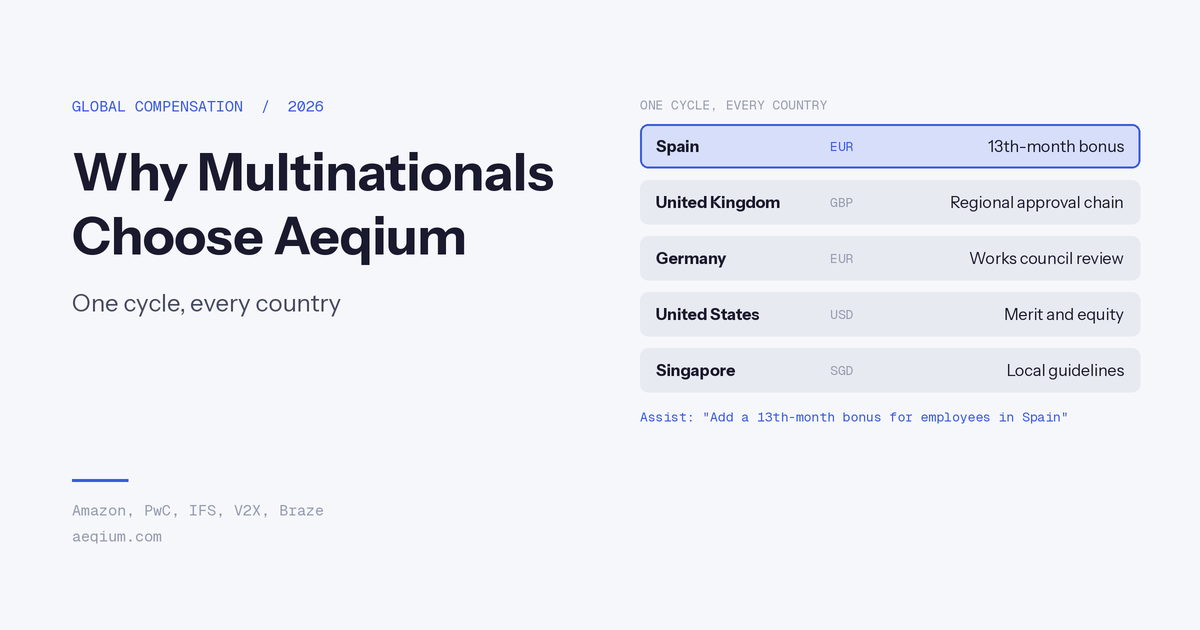
- Multi-Currency Support: Plan compensation across countries with real-time currency conversion
- Integrations with HRIS/Payroll: Sync data with tools like Workday, ADP, or SAP for a seamless process
- Manager Self-Service: Enable frontline leaders to input and review comp data directly
- Total Rewards Statements and Employee Access: Show employees their full compensation and pay ranges
- Reporting and Analytics: Generate dashboards and reports to support better decision-making
- AI That Executes: Make configuration changes and run analyses from plain-English instructions
Who Uses Compensation Management Software?
The primary users are:
- HR leaders and Total Rewards teams, who need to run equitable and compliant comp cycles
- Finance teams, who need to ensure budget alignment and forecasting
- People managers, who provide input and make recommendations during review cycles
- Executives, who want visibility into comp strategy and alignment across departments
Is It the Same as Compensation Planning Software?
Not exactly. Compensation planning software focuses specifically on the planning and execution of comp cycles: salary increases, bonus payouts, and promotions.
Compensation management software includes those capabilities but also supports broader year-round work such as pay ranges and market pricing, pay equity, off-cycle adjustments, offers, and total rewards communication.
To compare platforms, see the best compensation management software and tools and the best compensation planning software platforms compared.
When Should You Invest in Compensation Management Software?
You're likely ready for a dedicated solution if:
- You operate across multiple countries, business units, or complex org structures
- You offer sophisticated reward programs including equity, LTIPs, and multi-tier incentive plans
- You need enterprise-grade security, audit trails, and compliance controls
- You're managing compensation for 250+ employees and growing
- You've outgrown spreadsheet-based processes and need scalable infrastructure
Compensation Is Strategic, and Your Software Should Be Too
Today's compensation decisions aren't just about numbers. They're about alignment, accountability, and employee experience. The right compensation management software gives you the flexibility, control, and insight to build a rewards strategy that scales with your business.
Ready to Move Beyond Spreadsheets?
Aeqium's compensation planning software is built to handle complexity, from global teams and custom workflows to non-cash incentives and secure approvals.
Schedule a free demo to see how Aeqium can simplify your next compensation cycle.
Frequently asked questions
What is compensation management software?
Compensation management software is a platform for planning, managing, and communicating employee pay year-round, including merit and bonus cycles, pay ranges, pay equity, off-cycle changes, offers, and total rewards.
What's the difference between compensation management and compensation planning software?
Planning software focuses on running compensation cycles. Management software covers the full year, including pay ranges, market pricing, pay equity, off-cycle changes, offers, and total rewards communication.
Who uses compensation management software?
Total Rewards and HR teams, finance teams, people managers, and executives who need visibility into compensation decisions.
When should a company invest in compensation management software?
Usually once it crosses 250 employees, operates across multiple countries or business units, or runs equity and incentive programs that spreadsheets can't handle reliably.
What are the best compensation management tools?
See our comparison of the best compensation management software and tools.